Vaping for beginners: starting without missteps
Walking into a British vape shop for the first time rarely feels welcoming. The vocabulary arrives in blocks, the shelves hold hundreds of devices that look alike, and two members of staff will happily give opposite advice. Vaping for beginners goes wrong far more often through disorder than through bad luck: the kit ends up in a drawer within a fortnight because nobody explained the basic moves. This guide sets out the order in which the decisions should be taken.
Vaping for beginners: four decisions in the right order
Everything rests on four choices, and they only work in sequence: the draw style, the format of the device, the nicotine strength of the e-liquid and the composition of that liquid. Each one narrows the next. Taken in the wrong order, they almost always produce a setup that fights the person using it.
The thread running through all four is simplicity. A compact device, a tight draw and a liquid thin enough to feed a small coil form a coherent starting point. Everything below is an expansion of that single idea rather than a list of products.
Settle the draw before anything else
The draw is the way you pull vapour out of the device, and in Britain it is described with two abbreviations you will see on every product page. MTL, mouth to lung, means drawing the vapour into the mouth first and then inhaling it. The airflow is tight and the vapour discreet.
DTL, direct to lung, sends the vapour straight down in one movement, through a much wider airway, and produces a great deal more of it. The two are not variations on a theme. They call for different hardware, different coils and different e-liquid.
In vaping for beginners, MTL is where almost everyone starts, and the reason is practical rather than dogmatic. A tight draw uses far less liquid, tolerates the higher nicotine strengths sold in the UK, and does not surprise anyone with a cloud they did not ask for. Direct lung can come later, once the basics are boring.
The format of the device: aim for the fewest moving parts
Once the draw is settled, the shelf narrows on its own. Three families of hardware exist, and only one of them belongs in a first purchase.
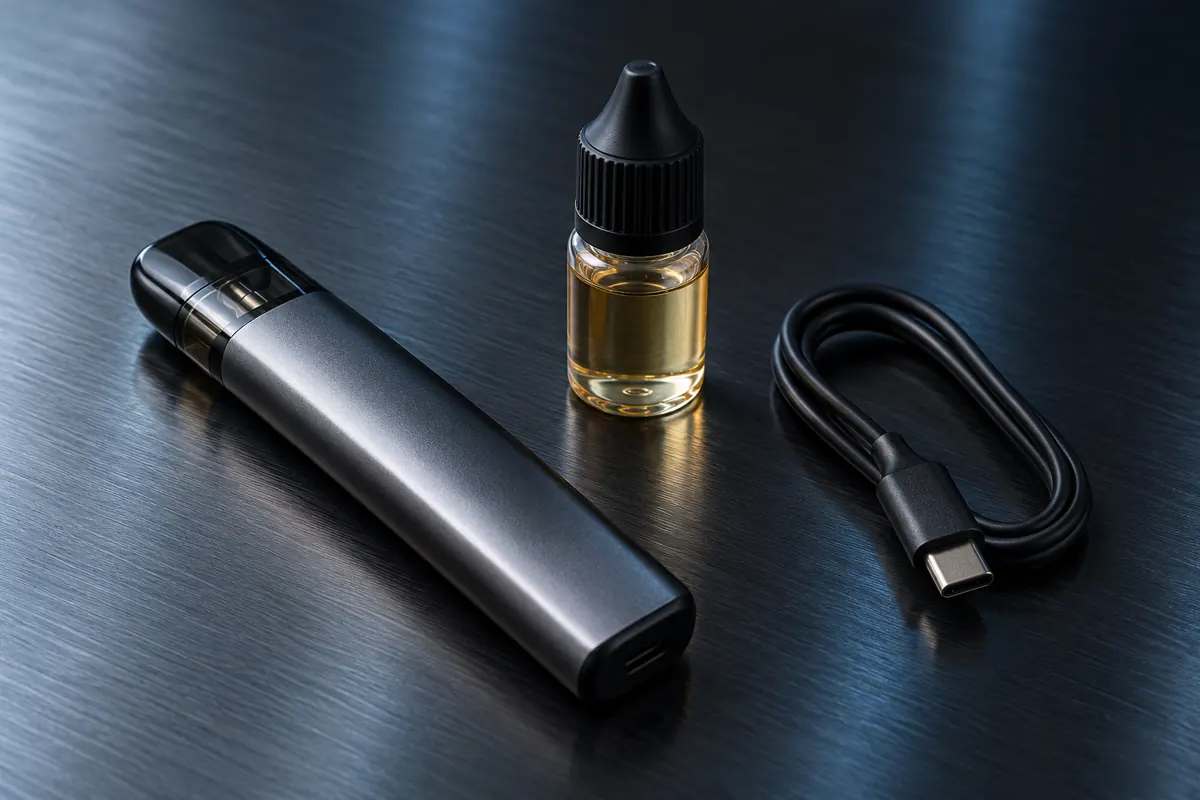
A pod kit is a small body into which you clip a cartridge holding the coil. You fill it, you vape, you swap the cartridge when the flavour fades. There is nothing to set, nothing to unscrew and very little to get wrong.
Larger kits with removable cells and separate tanks offer more runtime and far more control, and that is exactly what makes them a poor first step. The learning curve arrives before the enjoyment does. Our comparison of a pod or box mod for a first kit works through both formats in detail.
Nicotine and e-liquid: the pairing that decides the first weeks
The best hardware in the world is useless if the liquid inside it is wrong, and this is where most early abandonments actually happen. Two separate parameters are at play, and they are routinely confused with each other.
The first is nicotine strength. Too low and you vape continuously without ever feeling settled. Too high and the throat protests from the first puff. There is no universal figure, only a method, which our guide to choosing a nicotine strength sets out step by step.
The second is the base of the liquid, the balance between propylene glycol and vegetable glycerine. A thin, PG heavy liquid feeds the narrow coil of a small pod properly. A thick, VG heavy liquid starves it and produces exactly the dry, acrid puff nobody wants. The reasoning behind PG and VG on a label deserves reading before a first purchase rather than after.
What the UK rules have already decided for you
British regulation removes a large part of the guesswork, which is unusually helpful in vaping for beginners. Nicotine containing e-liquid is capped at 20 mg per millilitre, refillable tanks and prefilled pods at 2 ml, and bottles of nicotine e-liquid at 10 ml.
Two consequences follow. Any bottle, pod or strength beyond those figures is not a legal UK product, whatever a website registered elsewhere claims about the same device. And every beginner kit sold here is built around a 2 ml reservoir, which is why they are all roughly the same size.
Single use disposables have also been off the shelves since the ban on their sale took effect, so the entry point in Britain is now a refillable or a prefilled pod kit rather than a throwaway bar. That shift matters for anyone comparing older articles with the current shelf.
Vaping for beginners: the habits of the first weeks
Most content stops at the purchase, yet everything that determines whether the kit survives happens afterwards, in gestures nobody demonstrates at the till. Four habits prevent the majority of bad surprises.
Prime every new coil. Put a few drops of e-liquid directly onto the exposed wicking material, fill the pod, then leave it standing for several minutes before the first puff. This single pause is the difference between a coil that lasts and one that is ruined in a second.
Never vape a pod that is nearly empty, keep the puffs slow and long rather than sharp, and always hold one spare coil and one spare bottle at home. Running out on a Sunday evening is how a promising start turns into a shrug.
A short note kept over the first month, recording what worked and what irritated, speeds up the process more than any forum thread. Patterns become obvious in writing that stay invisible in memory.
One further habit belongs on that list, and it is the one most often skipped: change a single thing at a time. A new coil, a new bottle and a different device on the same afternoon guarantees that whatever happens next teaches you nothing at all.
Give each change a few days before judging it. The first fortnight is not a test to be passed quickly, it is a short period of observation, and treating it that way removes most of the frustration people report from their early weeks.
Frequently asked questions
How long does a coil last for a new vaper?
Between one and three weeks in most cases, depending on how often the device is used and what is in it. Heavily sweetened liquids shorten that considerably. The reliable signal is flavour: when it dulls or turns cottony, the coil is finished.
Should I switch the device off overnight?
Most pod kits cut out automatically after a few seconds of activation, but locking the device or powering it down before bed prevents accidental firing in a bag and preserves the cell. It costs nothing and removes a class of problem entirely.
Can I put any e-liquid in a pod kit?
No. A small tight draw pod needs a fluid liquid, generally PG heavy, to feed its narrow coil. A thick base wicks too slowly and produces misfires and dry puffs. Matching liquid to hardware is one of the first reflexes to acquire.
Why is everything limited to 2 ml in the shops?
Because UK rules cap refillable tanks and prefilled pods at that capacity. Larger figures on international listings refer to the same device sold under different rules, not to a better version of it, so comparing the two numbers is meaningless.
What if vaping simply does not suit me after a few days?
Before giving up on the kit, check the two parameters responsible for most early disappointment: the nicotine strength and the draw. Adjusting either often changes the experience completely, and a specialist shop can look at both in a couple of minutes.
The reference points worth keeping
Vaping for beginners needs no technical background and no elaborate setup, only a sensible order and a little patience during the first fortnight. A tight draw pod kit, a liquid whose base suits its coil, a strength arrived at by observation rather than guesswork and four everyday habits are enough to get through the early weeks without frustration.
The rest, finer adjustment and more ambitious hardware, arrives naturally once those foundations stop demanding attention. That is the whole point of the exercise: a device that is understood becomes a device you no longer think about.
Editorial content for adult readers only. Vaping products usually contain nicotine, a substance that causes addiction. Not for sale to under-18s in the United Kingdom. This article is not a buying recommendation.