PG and VG: what an e-liquid is made of
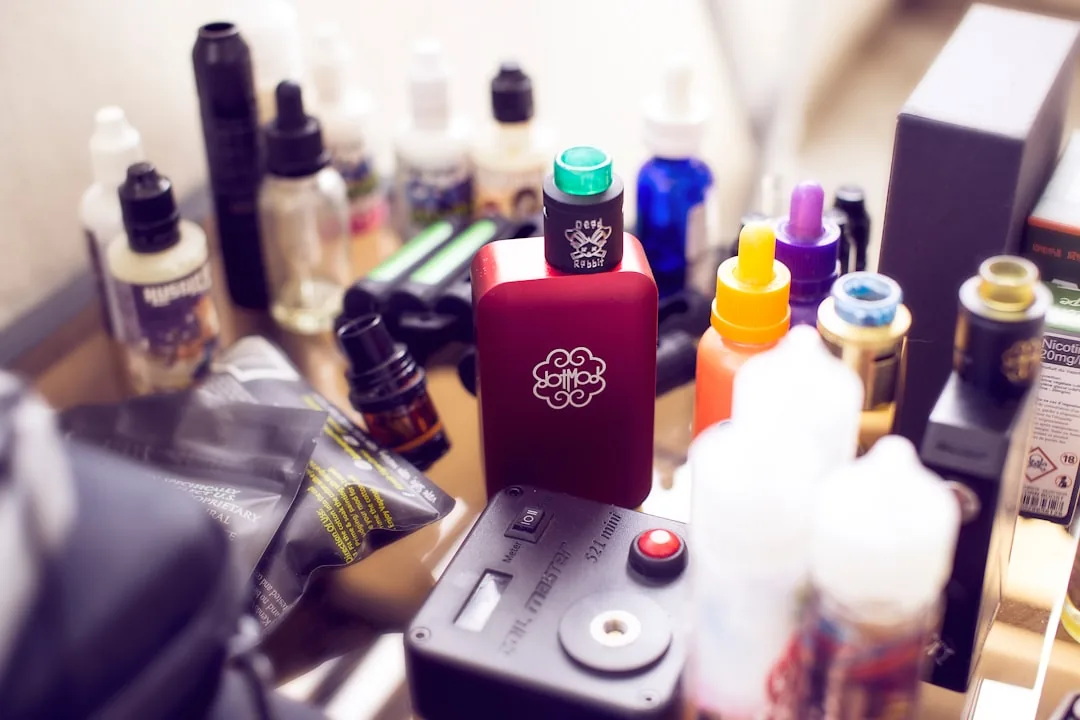
Picking up a bottle of e-liquid for the first time produces a small surprise. Two initials sit on the label, PG and VG, usually as a pair of numbers, and nothing on the packaging explains what they mean. Those letters decide how much vapour the kit makes, how firm the sensation in the throat feels and whether the liquid will even feed the coil properly. Understanding them is the difference between buying by accident and buying on purpose.
PG and VG: the two pillars of every e-liquid
An e-liquid rests on two main ingredients that together make up roughly ninety per cent of the bottle. PG, propylene glycol, is thin and colourless. VG, vegetable glycerine, is noticeably thicker and faintly sweet. The remainder is flavouring and, in most cases, nicotine.
For anyone starting out, one figure covers most situations. A balanced 50/50 base suits the great majority of first kits sold in Britain, because those kits are built around small coils and a tight draw. Everything else in this article is an adjustment around that starting point rather than a contradiction of it.
What each of the two actually does
Propylene glycol acts as the carrier. Flavourings and nicotine dissolve into it, and because it is thin it soaks into the wicking material quickly, which reduces the risk of heating dry cotton. It also produces most of the throat hit, that firm catch at the back of the throat, and it renders flavour sharply defined rather than rounded.
Vegetable glycerine does the opposite job. Its viscosity is what creates volume, so a VG heavy liquid produces dense vapour with a soft, slightly sweet undertone. The trade off is mechanical: thicker liquid wicks more slowly and gunks up narrow coils faster than a thin base does.
Neither is better in the abstract. They are two levers pulling in opposite directions, and the ratio printed on the bottle is simply where the manufacturer chose to sit between them for a given kind of hardware.
Which PG and VG ratio suits which kit
The choice is dictated by the device rather than by preference, and getting it wrong produces symptoms that look like faults. Leaks, gurgling, weak vapour and dry puffs are all commonly caused by a mismatch here rather than by a defective kit.
Small pods and tight draw kits, the format most people begin with, need a fluid liquid. A 50/50 base, or something with even more PG in it, feeds their narrow coil correctly and gives a defined flavour with a present throat hit. Put something thick in one and it will starve, which is one of the routes to the acrid puff described in our article on the burnt taste on a vape.
Powerful direct to lung hardware with wide, low resistance coils wants the opposite. Those coils turn viscosity into volume without clogging, which is why 70/30 in favour of VG is the standard on that side of the shelf. It is a setup for someone already settled rather than for a first purchase, a distinction our comparison of a pod or box mod covers in full.
The common shelf reference points read as follows. A 50/50 base is the versatile option for pods and tight draw kits. Ratios around 60/40 or 70/30 shift towards vapour for intermediate hardware. Anything at 80/20 in favour of VG assumes a powerful direct lung device and nothing smaller.
How UK bottles complicate the label
British shelves add a wrinkle that catches out anyone reading advice written for another market. Nicotine containing e-liquid is sold in bottles of no more than 10 ml at up to 20 mg per millilitre, so the ready to vape liquid you buy for a pod comes in small bottles by law.
Alongside them sit shortfills: larger bottles of nicotine free liquid, deliberately underfilled, designed to have a small nicotine shot added before use. Because those shots are usually PG heavy, adding one shifts the final ratio of the mixture slightly away from what the shortfill label says.
The practical consequence is worth remembering. A shortfill marked 70/30 will read a little differently once a shot has gone in, and shortfills are overwhelmingly formulated for direct lung hardware in the first place. For a small pod kit, a ready mixed 10 ml bottle at 50/50 keeps the arithmetic simple.
Sensitivity, wear and the trade offs nobody prints
One point that product pages tend to skip deserves attention. Propylene glycol dries the mouth or throat in some people, particularly during the first few days. It is not serious, and it usually responds to drinking more water or shifting slightly towards VG.
Vegetable glycerine is rarely responsible for that discomfort, but its thickness wears small coils out faster and can leave them tasting flat sooner. Adjusting a ratio therefore means arbitrating permanently between throat comfort, vapour volume and how long a coil survives.
There is no universally superior number. There is only a ratio suited to a given device and a given person, which is why the same bottle can be the right answer for one vaper and a poor one for their neighbour.
Flavour families interact with the ratio too, and this is where a lot of quiet disappointment comes from. Sharp, bright profiles such as menthol or citrus read cleanly on a PG heavy base and can seem muted once the liquid thickens. Dessert and custard profiles behave the other way round, gaining body from glycerine but leaving more residue behind on the coil.
None of that changes the compatibility rule, which comes first. It simply explains why two liquids at the same ratio, from the same shop, can feel like different products, and why testing a flavour on the hardware you actually own tells you more than any tasting note printed on the box.
Frequently asked questions
Does a 50/50 e-liquid suit every beginner?
In the large majority of cases, yes. It feeds the pods and tight draw kits that dominate the British beginner shelf, while giving defined flavour and a present throat hit. It is the safest place to start before refining anything.
Can I put a very high VG liquid in a small pod?
It is a poor idea. Vegetable glycerine is too thick to soak properly into the narrow wicking of a small coil, so misfires and dry, acrid puffs follow quickly. A small pod wants a fluid, PG leaning liquid.
Is PG responsible for a sore throat in the first days?
It can be. Propylene glycol dries the throat in sensitive people, especially early on. Drinking more water or moving slightly towards VG usually settles what is generally a passing irritation rather than a lasting problem.
What does 70/30 on a bottle actually mean?
The first figure is the proportion of VG and the second that of PG, though a few brands print them the other way round. A VG leaning 70/30 signals a thicker liquid built for powerful hardware. Checking which way the label reads avoids an expensive mistake.
Are there e-liquids with neither PG nor VG?
Some alternative bases replace part of the propylene glycol with other plant derived carriers for people who react to it. They remain a small niche and are harder to find in British shops. A conventional balanced base is the simplest starting point.
Reading a label instead of guessing at it
Understanding PG and VG changes how a bottle is bought. The ratio stops being an obscure detail and becomes the first compatibility check between the liquid and the hardware, ahead of flavour and ahead of brand.
Anyone using a tight draw pod can hold one rule and be right nearly every time: look for a fluid 50/50 liquid that feeds the coil properly and gives a clean throat hit. The day bigger vapour becomes the goal, the reasoning behind PG and VG will already explain why the new hardware asks for something thicker, which is exactly the point of learning it early. The same logic runs alongside the choice of a nicotine strength, and the two decisions are best made together.
Editorial content for adult readers only. Vaping products usually contain nicotine, a substance that causes addiction. Not for sale to under-18s in the United Kingdom. This article is not a buying recommendation.